
Functional Modulation of Quorum Sensing and Virulence
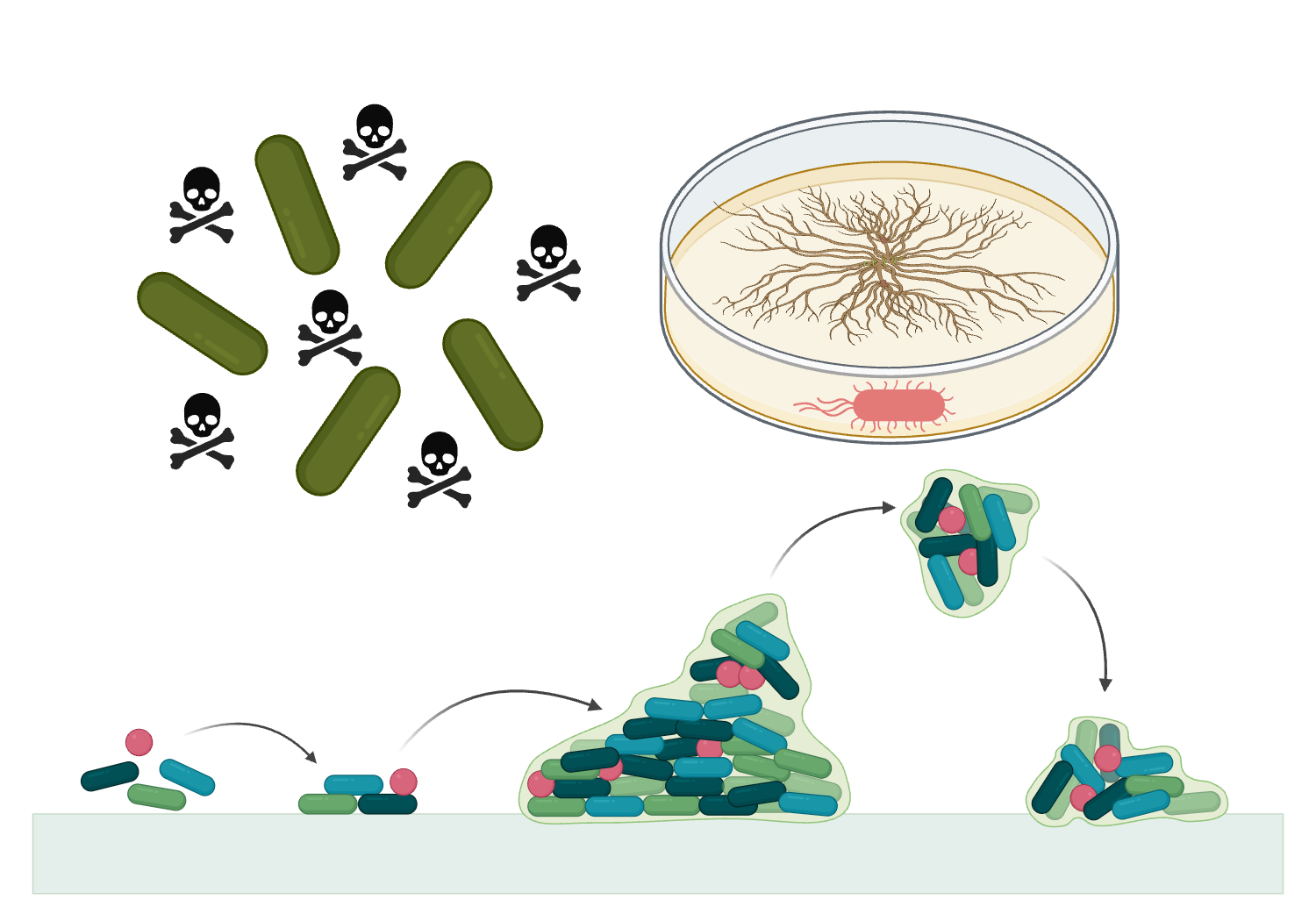
A second major focus of the lab is understanding how modified quorum sensing molecules influence bacterial behavior and virulence. Using both precursor analogs and biosynthetically generated PQS analogs, we investigate how structural changes to these molecules affect processes such as biofilm formation, motility, and production of virulence-associated factors in Pseudomonas aeruginosa. These studies aim to determine how altered signaling molecules can interfere with normal quorum sensing pathways, weaken bacterial coordination, or selectively modulate virulence-related behaviors. Because quorum sensing controls many pathogenic traits without being directly required for bacterial survival, disrupting these signaling pathways represents a promising antivirulence strategy. Rather than killing bacteria outright, this approach seeks to reduce their ability to establish infections and cause disease, which may help minimize the evolutionary pressure that drives antibiotic resistance. More broadly, this work contributes to understanding how small molecules shape microbial community behavior and how engineered signaling analogs can be used to reprogram or disrupt bacterial communication networks.